

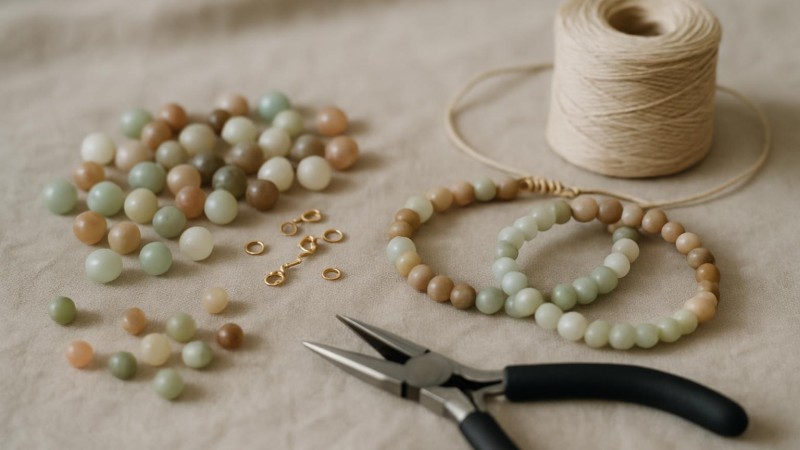
Wholesale and small business crafting sits where creativity meets disciplined sourcing, production planning, and brand-building. For jewelry makers, bead artists, boutique owners, and creative entrepreneurs, buying materials in larger quantities enables consistent collections, smoother workflow, and a more professional customer experience. Wholesale success is not just ordering more supplies; it’s choosing the right materials, understanding quality, creating repeatable designs, and treating each bead, clasp, and tool as part of a broader business system.
This guide is for makers who want to move beyond one-off hobby projects and build a sustainable craft operation. Whether you sell handmade bracelets at markets, assemble gemstone earrings for an online shop, create DIY jewelry kits, or stock supplies for studio workshops, the fundamentals are similar: reliable sources, practical inventory habits, realistic production methods, and a clear point of view customers recognize. A strand of amethyst beads can become many products, but thoughtful planning turns potential into a profitable collection.
Below you'll learn how wholesale sourcing works, how to evaluate gemstone beads and findings, how to build collections, organize inventory, avoid quality-control mistakes, and present your work professionally. We also cover branding, packaging, selling channels, customer communication, and growth. The goal is practical: a map you can use when making sourcing or production decisions.
Consider this a pillar reference for wholesale and small business crafting in jewelry. Decisions become easier when you understand the whole system: materials, design, workflow, quality, presentation, sales, and scale. Use this guide as a planning tool, checklist, and foundation for building a creative business with both beauty and structure.
Table of Contents
- Understanding the Wholesale and Small Business Crafting Landscape
- Sourcing Materials and Building Supplier Relationships
- Choosing Gemstones, Beads, and Core Product Materials
- Findings, Tools, and Studio Essentials for Jewelry Makers
- Designing Cohesive Collections for Small Business Success
- Inventory Planning, Batch Production, and Workflow
- Quality Control, Durability, and Product Safety
- Branding, Packaging, and Product Storytelling
- Selling Channels and Customer Experience
- Scaling Sustainably and Planning Long-Term Growth
- Frequently Asked Questions
- Conclusion
Understanding the Wholesale and Small Business Crafting Landscape
What wholesale means for makers
Wholesale crafting is buying materials in quantities that support repeated production, consistent design, and a more organized business model. For jewelry makers, that might mean several strands of gemstone beads, a pack of clasps, coordinated findings, or enough cord and wire for a seasonal collection. The benefit is financial efficiency and creative continuity: when you have matching materials on hand, products look intentional rather than improvised.
Small business crafting differs from hobby crafting because every material choice affects the customer's experience. A hobbyist uses what’s available; a business owner must ensure a design can be repeated, photographed consistently, described accurately, and repaired or reordered if needed. This matters with natural stone jewelry because color, inclusions, bead size, and finish vary from strand to strand. Wholesale thinking encourages planning around variation instead of being surprised by it.
Why jewelry is a strong category for small businesses
Jewelry has a long history as adornment and personal expression. Handmade gemstone bracelets, earrings, necklaces, rosaries, charms, and beaded accessories appeal to gift buyers, people seeking symbolic objects, fashion shoppers, and customers looking for keepsakes. The category is flexible: one studio may specialize in minimalist silver, another in bohemian gemstone stacks, artisan beadwork, or workshop supplies.
For small businesses, jewelry is attractive because collections can be modular. One bead style can work across bracelets, earrings, anklets, keychain charms, and necklaces. A finding like a clasp or spacer can support many designs. This modularity creates variety without losing control of materials. A strong wholesale strategy helps makers balance creativity with repeatability.
Common beginner misconceptions
Many new makers assume buying more materials automatically makes a business more serious. In reality, wholesale buying only helps when it supports a plan. Purchasing large quantities without design direction leads to crowded storage, forgotten supplies, and scattered collections. Start with a defined customer, a clear style, and a focused material palette.
- Do not buy every attractive bead just because it’s available.
- Do not assume all stones with the same name will look identical.
- Do not build a collection around materials you cannot source again.
- Do not overlook findings, cord, tools, and packaging when planning.
A small business doesn’t need to look large to operate professionally. It needs reliable habits. Document purchases, test what you make, and design with repeatable components so your studio becomes easier to manage. That is the core of wholesale crafting.
Sourcing Materials and Building Supplier Relationships
Start with the right sourcing questions
Good sourcing begins before you place an order. Ask whether the material supports your brand, product types, and production process. Consider bead size, hole size, finish, color consistency, durability, and compatibility with your cord or wire. A strand of agate beads may be beautiful, but if the holes are too small for your construction method, it will slow production or force design changes.
Wholesale buyers should think in categories. Core materials are items you use constantly—neutral beads, standard findings, and reliable stringing supplies. Accent materials add character—unusual stones, statement charms, seasonal colors, or limited textures. Experimental materials are tested in small amounts before committing to large runs. Separating purchases this way helps prevent impulse buying from overtaking planning.
Evaluating supplier reliability
A dependable supplier gives more than attractive products. Look for clear descriptions, accurate measurements, consistent photos, and transparent naming. In the gemstone world, names can be complex: stones may be natural, dyed, stabilized, heat-treated, composite, or imitation. Ethical communication matters because customers will ask what they’re buying, and your answers should be accurate.
Supplier reliability also means consistency over time. If you build a bestseller around a specific bead size and tone, you need to know if that material will be available again. Natural stones vary, but a strong supplier helps you understand that variation. Keep notes on batch differences, strand lengths, bead counts, and how materials behave in production. Over time, those notes become a sourcing library for your business.
Building a thoughtful buying process
For small businesses, a repeatable buying process reduces waste. Before a wholesale purchase, review current inventory, open orders, planned collections, and upcoming events. Create a materials list that separates essentials from nice-to-haves. If a product is untested, order enough to sample, photograph, and evaluate before relying on it for a full collection.
- Define the collection or product type you are supporting.
- List required beads, findings, stringing materials, and packaging.
- Confirm measurements, colors, finishes, and material notes.
- Estimate how many finished pieces each supply group can produce.
- Document supplier details and batch characteristics when items arrive.
Relationships matter, even online. Buying repeatedly from the same source teaches you how a supplier describes materials and how closely products match expectations. This familiarity speeds better decisions. PebbleBead, for example, can be a consistent reference for natural stone jewelry supplies when makers compare stones, findings, and components within a single catalog.
Choosing Gemstones, Beads, and Core Product Materials
Understanding natural variation
Natural stone jewelry has a visual richness factory-uniform materials can’t fully imitate. Variation in color, banding, translucency, inclusions, and polish is part of the appeal. But variation must be managed in business. If you use turquoise beads in a photo, customers expect a similar range of blue, green, or matrix pattern in the piece they receive. Describe natural variation and keep finished items within a consistent aesthetic range.
Bead size matters. Millimeter differences change look, weight, drape, and style. Small beads feel delicate and layered; larger beads create stronger impact. Hole size matters for elastic, wire, leather, and macramé cord. Always test your construction material with the bead before building a product line around it.
Popular gemstone categories for small businesses
Many makers build collections around familiar stones plus distinctive accents. Familiar stones are easier for customers to recognize and search for; distinctive stones help you stand out. Quartz-family stones, jaspers, agates, obsidian, lava stone, howlite, aventurine, and tiger eye are common because they appear in many colors and finishes. freshwater pearls remain popular for classic, bridal, minimalist, and modern-romantic styles.
When discussing symbolism, be careful and respectful. Across history, many cultures associated stones with meaning, protection, beauty, luck, or spiritual qualities. For example, amethyst is traditionally linked with calm and clarity, while rose quartz is often regarded as a symbol of love and gentleness in modern crystal traditions. Use these ideas as tradition or personal meaning, not medical fact.
Balancing trends and evergreen materials
A smart selection includes both trend-responsive and evergreen materials. Trend items include seasonal colors, unusual cuts, matte finishes, mixed-metal looks, or statement beads. Evergreen materials are dependable year after year. Neutral stones, black or white beads, metallic accents, pearls, and classic rounds often perform well because they’re easy to wear.
- Use evergreen materials for your core line.
- Use trend materials for limited capsules and seasonal drops.
- Use rare stones as focal pieces rather than whole collections.
- Keep sample photos of each batch to document differences.
The best material selection supports your designs, production flow, customer expectations, and brand identity. Choose stones with both artistry and repeatability in mind so wholesale buying is an advantage, not a storage problem.
Findings, Tools, and Studio Essentials for Jewelry Makers
Findings are the architecture of jewelry
Findings are the functional components that hold jewelry together: clasps, ear wires, head pins, eye pins, crimps, jump rings, bead tips, spacer beads, connectors, and chain ends. While beads get attention, findings determine how a piece wears, fastens, and lasts. A beautiful bracelet can fail if the clasp is weak or a ring isn’t closed properly. For a small business, findings are structural decisions.
Material choice matters. Customers may prefer stainless steel, sterling silver, gold-filled, brass, copper, or hypoallergenic options depending on sensitivity. When using sterling silver findings, communicate clearly and stay consistent in product descriptions. If you mix metals intentionally, make it part of the design story rather than an accidental mismatch.
Essential tools for repeatable work
A professional studio doesn’t need excessive equipment but does need reliable basics. Most beaded jewelry makers benefit from chain-nose pliers, round-nose pliers, flush cutters, bead boards, measuring tools, a work mat, storage containers, and polishing cloths. jump rings require careful opening and closing, and good pliers make that cleaner. Invest time in technique as well as tools.
Tools affect finish quality. Rough cutters leave sharp wire ends. Poorly shaped pliers can mark soft metals. Inaccurate measuring produces inconsistent sizes. Round-nose pliers are useful for loops, but loop size depends on where the wire sits on the tapered jaw. Mark preferred positions with a small visual guide to improve consistency in batch production.
Studio organization basics
Small studios get inefficient when tools and supplies are hard to find. Organize by function rather than vague categories. Keep earring findings together, stringing materials together, finished inventory separate from raw materials, and tools within arm’s reach. Transparent containers, drawer labels, bead trays, and small parts boxes save time.
- Create a dedicated receiving area for new supplies.
- Store metal components in dry, labeled containers.
- Keep sharp tools capped or separated from delicate materials.
- Maintain a small repair kit for customer service needs.
- Record tool preferences and techniques in a studio notebook.
The goal is a workspace that supports calm, repeatable making. When tools, findings, and materials are organized, you spend more time designing and less time searching. That efficiency is a business strength.
Designing Cohesive Collections for Small Business Success
Begin with a collection concept
A collection is more than a group of products made at the same time. It’s a visual and emotional story with shared colors, materials, forms, or themes. For a gemstone brand, a collection might be inspired by desert neutrals, ocean tones, lunar colors, botanical greens, or minimalist everyday wear. The concept helps decide which beads fit and which don’t. It also helps customers understand your work.
Balance originality with production reality. A bracelet with complex knotting, rare focal stones, and many custom components may be stunning but hard to reproduce. A simple stretch bracelet made with elastic cord may be easy to batch, but it still needs strong design choices to feel distinctive. Combine recognizable construction with a memorable material palette.
Create tiers of complexity
A strong collection includes levels of complexity. Entry pieces are simple and wearable. Signature pieces show design identity through unique color combos, focal beads, or mixed materials. Statement pieces take longer to produce and serve as anchors for photos, displays, and storytelling. This tiered approach serves different customer preferences without reinventing your process.
Design families multiply options. A bracelet using matte black stone, metal spacers, and one focal bead can be adapted into earrings, a necklace, or stackable variations. bead caps can turn a plain bead into an ornate focal element without a new design system. Repetition creates recognition when it’s intentional.
Prototype before committing
Every collection should be prototyped. Make a sample, wear it, photograph it, measure it, and time production. Check if beads rotate awkwardly, if the clasp is easy to use, if earrings hang evenly, and if the palette photographs accurately. A piece that looks good on a bead board may behave differently on the body.
- Sketch or outline the collection theme.
- Select a limited palette of primary and accent materials.
- Create prototypes in each product type.
- Test wearability, durability, and production time.
- Document the final recipe for each design.
Designing for business doesn’t remove creativity; it gives creativity a repeatable structure. A cohesive collection helps customers browse with confidence and lets you produce with less guesswork. Over time, your best concepts become part of your brand signature.
Inventory Planning, Batch Production, and Workflow
Inventory is creative control
Inventory planning is a major difference between casual crafting and small business crafting. When materials are documented, you know what you can make, what needs replenishing, and which designs are realistic for the next collection. Without inventory control, makers rediscover forgotten supplies while running short of essentials, creating stress and interrupting production.
Start with simple categories: beads, findings, stringing materials, tools, packaging, finished products, and samples. Within beads, sort by stone type, size, shape, color, or collection use. If lava beads are a core element in men’s bracelets, aromatherapy jewelry, or earthy stacks, keep them clearly labeled. The easier it is to see what you have, the easier it is to plan.
Batch production methods
Batch production completes similar tasks together instead of making each product start-to-finish one at a time. For example, cut all cords, arrange bead patterns, assemble bracelets, then photograph and tag finished pieces. This reduces tool switching and keeps consistency. Errors are easier to catch when you focus on one task type at a time.
For beaded jewelry, organize batches by product type or material family. A bracelet batch might include multiple sizes of the same design. An earring batch might prepare all wire loops before attaching ear components. crimp beads should be applied carefully and inspected during each batch because they’re small but essential. One rushed step can compromise many items.
Documentation and product recipes
Product recipes are simple records showing how each design is made: bead names, sizes, counts, finding types, cord or wire length, finishing method, finished measurement, and notes about variation. Photos of the layout help. These records let you reproduce bestsellers, train help, and answer customer questions.
- Use spreadsheets, notebooks, or inventory apps depending on your style.
- Record how many finished pieces each material batch can produce.
- Separate prototypes from approved production designs.
- Label unfinished work so it isn’t confused with finished inventory.
- Review slow-moving materials and redesign them into new products when appropriate.
Inventory planning doesn’t remove spontaneity; it makes spontaneity less risky. When you know your materials, quantities, and recipes, you make better creative decisions and respond more calmly to demand.
Quality Control, Durability, and Product Safety
Why quality control matters
Quality control is checking materials and finished pieces before they reach customers. In handmade jewelry, quality isn’t about machine finish; it’s intentional craftsmanship, accurate descriptions, safe construction, and reliable wear. Customers expect clasps to work, earrings to be comfortable, and stringing materials to suit the design. A small business builds trust through these details.
Begin QC when materials arrive. Check bead holes, surface chips, cracks, coating irregularities, and color differences. Some natural inclusions are normal; structural cracks can weaken a bead. Inspect findings for burrs, weak solder points, inconsistent plating, or rough edges. If ear wires are part of your line, make sure pairs are matched and smooth before assembly.
Construction testing
Each jewelry type has weak points. Stretch bracelets can fail if the cord is too thin, overstretched, or poorly knotted. Wire-strung necklaces can fail if crimps are flattened incorrectly. Earrings can loosen if loops aren’t fully closed. Chain designs can snag if cut ends are rough or connectors are too thin for the piece’s weight.
Testing is simple: wear prototypes during normal activity, gently tug connection points, open and close clasps repeatedly, and observe materials over time. Match components to weight—large focal pendants need stronger support than small charms. If you use coated or dyed materials, test whether rubbing affects appearance.
Safety and clear communication
Jewelry makers should communicate responsibly. Include age guidance for small parts, avoid overstating material qualities, and describe metals and stones accurately. Do not claim a stone cures, treats, or prevents health conditions. If you mention traditional symbolism, use phrases like in folklore, historically associated with, or traditionally believed to represent.
- Inspect every finished piece under good light.
- Check clasp function, loop closures, knots, crimps, and wire ends.
- Confirm product measurements match descriptions.
- Separate seconds or experimental pieces from finished inventory.
- Keep notes on customer feedback related to durability.
Quality control may feel time-consuming, but it protects your reputation. A maker who inspects carefully will catch problems before customers do—one of the strongest advantages of a small handmade business.
Branding, Packaging, and Product Storytelling
Branding begins with clarity
Your brand is the impression people form when they encounter your jewelry, photos, descriptions, packaging, and communication. It’s more than a logo or color palette. A strong brand answers: who is this for, what feeling does it create, and why is it distinct? In gemstone jewelry, answers might involve natural textures, symbolic stones, minimalist styling, heirloom romance, earthy materials, or modern craft.
Small businesses often try to appeal to everyone. A focused brand is more memorable. If your work centers on muted neutrals, raw textures, and everyday layering, let that guide materials, photography, and packaging. If it’s colorful and charm-heavy, be consistent. Customers remember focused styles more than scattered assortments.
Packaging as part of the product experience
Packaging should protect jewelry and reinforce care. It doesn’t need to be excessive. Clean cards, labeled pouches, care notes, and sturdy presentation make handmade work feel complete. jewelry boxes are useful for delicate pieces, gift-ready items, and designs that need protection from tangles or bending.
Think of packaging in layers: immediate protection, presentation, information, and storage. A necklace may need a card to prevent tangles, a pouch for storage, and a care note explaining how to keep metals and stones looking their best. organza bags work for lightweight presentation or event inventory, but delicate pieces may need more structure. Choose packaging that fits the jewelry, not trends alone.
Storytelling that respects materials
Product storytelling links materials, inspiration, and use. Instead of listing a bracelet as blue stone with silver accents, describe tone, texture, and styling options. Mention whether the design is for layering, gifting, everyday wear, or a collection theme. If a stone has traditional associations, keep language careful—for example, lapis lazuli has long been associated in art and folklore with wisdom and deep blue luxury.
- Describe color, finish, size, and texture clearly.
- Explain natural variation without framing it as a flaw.
- Use collection names to group related products.
- Keep metaphysical language optional and tradition-based.
- Match packaging style to the brand's visual identity.
Good branding makes your work easier to understand. Good packaging makes it easier to appreciate. Good storytelling helps customers connect beyond materials. Together, these elements make handmade jewelry a complete experience.
Selling Channels and Customer Experience
Choosing where to sell
Small jewelry businesses can sell through online shops, social platforms, craft markets, boutiques, workshops, studio events, subscription releases, or private commissions. Each channel has strengths. Online shops allow detailed listings and broad reach. Markets provide immediate feedback and personal connection. Boutiques introduce your work to local audiences. Workshops turn your skills into an experience as well as a product.
Your selling channel should match production capacity and brand style. Highly customized designs need a channel that supports conversation and lead time. Repeatable inventory suits an online catalog or market display. For supply-focused businesses, offering kits or curated materials like beading wire with instructions serves customers who want to make their own jewelry.
Product presentation and descriptions
Customers can’t touch online jewelry, so presentation must answer questions. Provide clear photos, measurements, materials, closure type, weight impression when relevant, and notes about natural variation. Show scale with careful styling and avoid clutter. If an item is adjustable, explain how. If it’s a set size, describe how customers should choose.
Descriptions should be accurate, warm, and specific. Tell the customer what the item is made from and how it can be worn. For example, describe a matte onyx bracelet as a minimal black gemstone design for layering with metal bangles or wearing alone. Avoid promises the material can’t support. Trust grows when the received item matches the listing.
Customer communication
A professional experience includes timely, kind, and clear communication. Answer sizing, materials, care, and customization questions patiently. Keep templates for common inquiries, but personalize replies when needed. If a customer asks about stone meaning, frame it through tradition or personal symbolism rather than certainty.
- Create product descriptions that answer common questions before they’re asked.
- Use consistent measurement methods across listings.
- Offer care guidance for each material type.
- Track customer feedback to improve future designs.
- Keep tone consistent with your brand personality.
Customer experience is how your craft reaches people. When customers feel informed and respected, they are more likely to return and recommend your work.
Scaling Sustainably and Planning Long-Term Growth
Growth should support the maker
Scaling a craft business doesn’t always mean getting large. It means building systems that reduce chaos and increase consistency. For one maker, scaling may mean batch production instead of single pieces. For another, it may mean adding help, offering workshops, creating supply kits, or developing a wholesale line for boutiques. Sustainable growth respects creative energy and customer demand.
The danger of growth is overextension. Adding too many products, channels, or custom options at once hurts quality and focus. Improve systems behind your strongest work. Identify designs that fit your brand, are easy to reproduce, and are appreciated by customers. Build around those strengths instead of chasing every opportunity.
Systems that make growth easier
Small systems create big relief. Product recipes, inventory records, photo templates, care-card text, packaging stations, and production calendars reduce decision fatigue. These systems make it easier to bring help into the studio. If someone else can count beads, prepare cards, or organize materials to your method, you can focus on design, quality, and customers.
Review your material strategy as you grow. Core supplies should be dependable and easy to reorder; limited materials should be clearly limited. If a design depends on rare focal stones or unique charm pendants, present it as a small-run piece rather than promising ongoing availability. This avoids frustration and makes scarcity part of the story.
Creative development over time
Long-term craft businesses evolve. Early work may be broad while mature work is refined. Keep records of collections, customer responses, production challenges, and visual themes. Review old designs: retire some, update others with better materials or construction.
- Scale designs that fit your brand and workflow.
- Document repeatable tasks before hiring or outsourcing.
- Protect creative time by reducing unnecessary complexity.
- Review inventory and retire materials that no longer fit.
- Plan growth around quality, not just quantity.
Sustainable growth is patient. It values reputation, craftsmanship, and consistency over rushed expansion. A well-run small business can stay intentionally small, grow into a larger studio, or become a hybrid of finished jewelry, supplies, and education. The right path supports both maker and customer experience.
Frequently Asked Questions
What is the difference between wholesale crafting and regular crafting?
Regular crafting focuses on individual projects, experimentation, and personal enjoyment. Wholesale crafting uses larger quantities to support repeatable products, collections, workshops, or inventory. The main difference is planning: a business-minded maker considers consistency, sourcing, documentation, quality control, and customer expectations. Creativity stays central but is supported by organization.
How do I know which jewelry supplies to buy in larger quantities?
Start with supplies you use repeatedly across designs: neutral beads, common findings, standard stringing materials, packaging basics, and tools for your main product types. Avoid heavy commitment to untested materials until you make samples and confirm they fit your brand. Buy broadly for testing, then buy deeply for proven designs.
Are natural gemstone beads always identical from one batch to another?
No. Natural gemstone beads vary in color, pattern, translucency, inclusions, and finish. This variation is part of their beauty but must be communicated clearly. If exact matching is important, sort beads before production and keep batch notes. Product photos should show the realistic range customers can expect.
What tools should a beginner jewelry business prioritize first?
Most beaded jewelry makers should start with chain-nose pliers, round-nose pliers, flush cutters, bead boards, measuring tools, and organized storage. The exact list depends on whether you make stretch bracelets, wire-strung necklaces, earrings, or wrapped components. Good technique with basic tools is more valuable than many tools you rarely use.
How can I make my handmade jewelry look more professional?
Professional appearance comes from consistent measurements, clean finishing, quality findings, careful photography, and clear descriptions. Inspect loops, crimps, knots, clasps, and wire ends before listing or displaying. Use packaging that protects the piece and matches your brand. Document designs so successful products can be made consistently.
Should I follow jewelry trends or create evergreen designs?
Balance both. Evergreen designs create stability by fitting your brand over time. Trend-inspired pieces add freshness and give customers new options. Use trends as accents or seasonal capsules rather than replacing your core identity.
Can I mention gemstone meanings in my product descriptions?
Yes, but carefully. Present gemstone meanings as folklore, tradition, history, or personal symbolism rather than proven effects. For example, say a stone has traditionally been associated with courage or calm in certain traditions. Avoid medical claims.
How much inventory should a small jewelry business keep?
Inventory depends on product types, selling channels, production speed, and storage. Keep enough core materials to make proven designs without interruption, but avoid filling your studio with supplies that lack a plan. Track usage and customer response to decide what deserves regular replenishment.
What is the best way to organize beads and findings?
Organize supplies to match how you work. Many makers sort beads by stone type, size, color, or collection; findings work best sorted by function and metal tone. Use labels, transparent containers, trays, and separate areas for raw materials, work in progress, and finished inventory. The best system is one you can maintain.
How do I avoid wasting materials when experimenting?
Set aside a sample area and keep experiments separate from approved production designs. Test new materials in small batches, photograph prototypes, and note construction challenges. If an experiment doesn’t become a finished product, reuse components in earrings, charms, kits, or limited designs. Waste falls when every test teaches you something for future production.
Conclusion
Wholesale and small business crafting succeeds when creativity and structure work together. Beautiful materials matter, but they’re more powerful when supported by thoughtful sourcing, organized inventory, repeatable production, careful quality control, and clear storytelling. For jewelry makers, small components often carry the greatest responsibility: a clasp, cord, bead hole, or loop can determine whether a customer enjoys a piece for years or is disappointed after a few wears.
This guide covered the system behind a sustainable craft business: selecting gemstone beads and findings, designing cohesive collections, planning batches, presenting products, and growing at a manageable pace. The central lesson is simple: don’t separate artistry from operations. The more clearly you understand materials and workflow, the more freedom you have to create with confidence.
As you build or refine your jewelry business, return to these principles often. Test before scaling, document what works, communicate honestly, and let your brand become recognizable through consistent choices. When you’re ready to explore materials for your next collection, browse the PebbleBead catalog with a plan and choose supplies that support your creative vision and long-term business goals.

Leave a Comment