

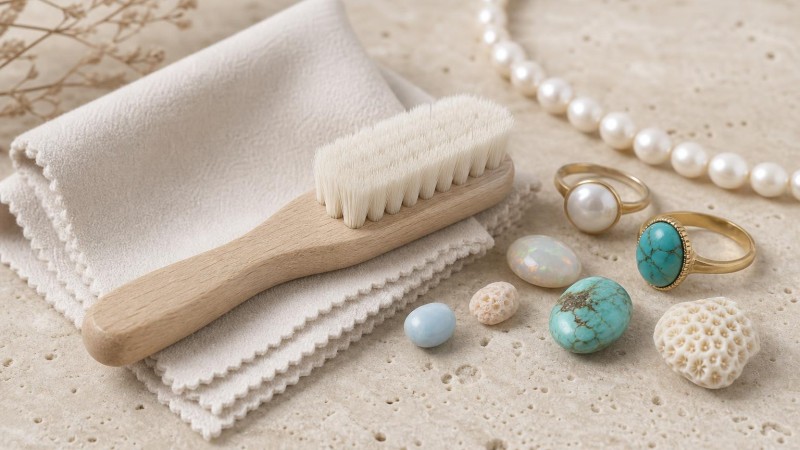
Jewelry care is not one-size-fits-all. A method that leaves diamond or sapphire sparkling can permanently alter a porous gemstone or damage the surface of a cultured pearl. Opal, turquoise, coral, lapis lazuli, and many other organic or porous materials require a gentler approach, while pearls need special care because their nacre can be scratched or attacked by common household chemicals.
The safest cleaning routine starts by identifying the material, understanding its treatments, and using the least aggressive method that will remove ordinary dirt. This guide shows how to clean porous gemstones and cultured pearls safely, which cleaning methods to avoid, and how to care for beads and finished jewelry between cleanings.
Why Porous Gemstones Need Special Care
Porosity describes a material’s ability to absorb liquids into tiny openings or spaces. Gem materials vary widely in structure, and porosity is only one factor that affects care. A stone may also be relatively soft, fractured, treated, dyed, coated, or sensitive to heat and chemicals. That’s why hardness alone can’t determine whether a cleaning method is safe.
Turquoise is a classic example. Its structure can make untreated material relatively porous, allowing oils and other substances to affect how it looks. Turquoise may also be stabilized, impregnated, dyed, or otherwise treated. When caring for turquoise beads, don’t assume that two strands that look similar will respond the same to moisture or cleaners.
Other materials that require caution include lapis lazuli, malachite, coral, amber, jet, certain opals, and many bead materials with surface treatments or dyes. Even when a mineral itself seems durable enough for a given technique, enhancements can change the right care routine.
Why Cultured Pearls Are Different
Cultured pearls are organic gems grown inside mollusks with human assistance. Their visible surface is nacre, a layered material made primarily of calcium carbonate crystals held within an organic matrix. Nacre creates the soft luster and orient prized in fine pearls, but it also calls for careful handling.
Acids and harsh chemicals can attack pearl surfaces, while abrasive materials can scratch them. Perfume, hairspray, cosmetics, household cleaners, and perspiration may leave residues, so gentle routine care is better than aggressive occasional cleaning. This applies to many pearl varieties, including freshwater pearls used in necklaces, bracelets, earrings, and beadwork.
There’s also a historical reason pearls often receive extra attentive care. Across many cultures, pearls have symbolized purity, status, wisdom, or good fortune. These associations belong to cultural history and folklore rather than medical science, but they help explain the lasting value people place on preserving pearl jewelry.
The Safest Principle: Start With the Least Cleaning Necessary
More cleaning power isn’t automatically better. For vulnerable gems, the safest approach is to start with dry or barely damp cleaning and step up only when you know the material, treatments, setting, and construction can handle it.
Before cleaning, inspect the jewelry in good light. Look for loose stones, cracks, flaking surfaces, damaged coatings, worn stringing material, exposed knots, weakened adhesive, or bent findings. If a piece has major damage, uncertain treatments, antique value, or an unknown gemstone, a professional assessment is safer than experimenting.
For routine home care, keep the basics simple:
- A clean, soft, lint-free microfiber or cotton cloth
- A separate soft cloth that can be slightly dampened when appropriate
- Clean lukewarm water for materials known to tolerate brief contact
- A dry, padded surface so jewelry can’t roll or fall
- Good lighting for checking settings, holes, knots, and surfaces
Soft microfiber cloths are especially helpful because they lift fingerprints and surface residue without the harsh polishing action of abrasive products.
How to Clean Porous Gemstones Safely
Step 1: Identify the Stone and Any Treatments
Whenever possible, confirm what the gemstone is and whether it has been stabilized, dyed, waxed, oiled, impregnated, coated, or assembled from multiple materials. Treatments are common and legitimate in the gem trade, but they can affect your cleaning choices. If treatment status is unknown, conservative care is the safest default.
Step 2: Remove Loose Surface Dust
Use a clean, dry, very soft cloth to gently wipe accessible surfaces. Don’t scrub. Dust and grit can contain hard particles that may scratch softer stones, so use light strokes and switch to a clean section of the cloth often.
Step 3: Use Minimal Moisture When Appropriate
If the identified gemstone is suitable for brief water contact, slightly dampen a soft cloth with clean lukewarm water and wring it out thoroughly. The cloth should be damp, not dripping. Wipe the surface gently, avoiding prolonged wetting around drill holes, glued areas, or stringing material.
Don’t soak porous gemstone jewelry as a routine. Soaking can let moisture or cleaning agents penetrate pores and fractures, affect dyes or impregnation materials, and reach adhesives or components hidden within the design. A quick surface wipe gives you far more control.
Step 4: Dry Promptly
Blot the piece carefully with a clean dry cloth and let it finish air-drying on a protected surface at normal room temperature. Avoid hair dryers, heaters, radiators, direct hot sunlight, or any other attempt to speed drying with heat. Sudden temperature changes can be risky for certain gems, especially materials with internal fractures or that contain water.
How to Clean Cultured Pearls
Pearl care is pleasantly simple when done regularly. After wearing pearl jewelry, gently wipe each pearl with a soft, slightly damp cloth to remove residue from skin and cosmetics. Follow with a dry soft cloth if there’s still significant moisture, then let the piece air-dry before storing.
For a lightly soiled strand, careful wiping is usually better than soaking. Avoid soaking the string, especially when pearls are traditionally knotted on silk or another absorbent cord. Repeated wetting can weaken or stretch some stringing materials and can make built-up grime around drill holes harder to manage.
When examining pearl strands, check whether knots look stretched, discolored, frayed, or loose. Also look for increased gaps between pearls or movement at the clasp. These signs relate to the necklace’s construction as much as the pearls themselves and may indicate restringing is needed.
Don’t clean pearls with vinegar, lemon juice, baking soda, toothpaste, abrasive polishing compounds, bleach, ammonia, or general-purpose household cleaners. Even popular homemade cleaning recipes may be unsuitable for calcium-carbonate-based gem materials.
Cleaning Methods to Avoid
Ultrasonic Cleaners
Ultrasonic machines use high-frequency vibration in a liquid bath to dislodge contamination. They can be useful for certain durable jewelry under the right conditions, but they’re a poor default for porous, fragile, fractured, treated, or organic gems. Vibration and liquid exposure can worsen existing weaknesses or affect treatments. Cultured pearls should not be placed in an ultrasonic cleaner.
Steam Cleaning
Steam adds both heat and moisture. Those are unwanted variables for many sensitive stones, treated gems, glued jewelry, and pearls. Reserve steam cleaning for jewelry that’s specifically confirmed to tolerate it—not as a universal shortcut.
Household Chemical Solutions
Alcohol, solvents, acids, alkaline cleaners, chlorine products, and multipurpose cleaners can discolor or damage sensitive materials and treatments. Even mild dishwashing products shouldn’t automatically be used on every porous gem. When gem identification or treatment is uncertain, a soft cloth and minimal moisture are safer.
Abrasive Brushes and Powders
Stiff toothbrushes, scouring powders, abrasive pastes, and polishing compounds can scratch soft gems and pearl nacre. A new toothbrush labeled soft is still a brush, and its action may be unnecessarily harsh for vulnerable surfaces.
Special Considerations for Common Sensitive Gems
Opal deserves extra attention because different types and treatments need different care. Some opals contain significant water within their structure, and assembled opal doublets or triplets use layers joined together. Avoid prolonged soaking, harsh chemicals, high heat, and sudden temperature changes. If you work with opal beads, confirm whether the material is solid, assembled, treated, or imitation before choosing a cleaning method.
Lapis lazuli is an aggregate rock that commonly contains lazurite along with other minerals such as calcite and pyrite. It may be dyed or treated with wax or oil. Its varied composition and possible treatments make gentle surface cleaning preferable to acids, chemical cleaners, or abrasives.
Malachite is relatively soft and sensitive to acids and harsh chemicals. Clean it conservatively and avoid powdered polishing products. Coral is an organic, calcium-carbonate-based gem material and needs similar protection from acids, harsh chemicals, abrasion, and excessive heat.
Amber is fossilized resin, not a mineral. It’s relatively soft and can be affected by heat and various chemicals, including some solvents. Keep perfume and hairspray away from amber and clean it using especially gentle methods.
Jewelry Construction Matters Too
A gemstone may not be the most vulnerable part of a piece. Jewelry can include adhesives, thread, elastic, wire, plated metal, oxidized finishes, or other components with their own care needs. That’s why cleaning has to match the entire object—not just the centerpiece stone.
Inspect jump rings and clasps before wiping a necklace or bracelet so weakened connections aren’t pulled apart during handling. Be especially careful with glued cabochons or bead caps, since liquids and solvents can compromise some adhesives.
Likewise, jewelry made with beading wire should be checked for kinks, abrasion, or exposed inner strands. Cleaning can’t correct structural wear. Repair or restring a compromised piece before regular use instead of relying on careful cleaning to extend a failing component.
Preventive Care Makes Cleaning Easier
The best cleaning method is partly prevention. Put gemstone and pearl jewelry on after cosmetics, fragrance, hairspray, and lotions have been applied and allowed to dry. Remove vulnerable pieces before swimming, bathing, household cleaning, gardening, strenuous activities, or using products that could splash onto the jewelry.
Storage matters too. Pearls and softer gems can be scratched by harder jewelry, so keep them in separate compartments or soft pouches instead of letting pieces rub together. Don’t store pearls away indefinitely in overly dry conditions, and avoid storage spots exposed to strong heat or direct sunlight.
Loose gemstone beads also benefit from sorting by material and keeping them away from abrasive metal components. Labeling bead containers with known treatments or care notes is a useful habit for jewelry makers, especially when several similar-looking materials are stored together.
A Simple Maintenance Schedule
There’s no universal cleaning calendar because how often you need to clean depends on how frequently a piece is worn and what it comes in contact with. A quick inspection and gentle wipe after wear is an effective routine for pearls and many sensitive gems. More thorough attention should be occasional and based on real need—not done automatically.
Periodically inspect necklaces and bracelets for stretched thread, worn knots, damaged clasps, loose settings, and residue around drill holes. Earrings should be checked around posts and findings, while rings should be inspected for loose settings because they face frequent impacts and contamination.
When Professional Cleaning Is the Better Choice
Get advice from a qualified jeweler or gem professional when you can’t confidently identify a stone, suspect an unfamiliar treatment, see a loose setting, own an antique or especially valuable piece, or notice peeling, cracking, discoloration, or surface changes. Professional cleaning should also start with proper identification—no machine or solution is safe for every gem.
If a jewelry professional knows which materials and treatments are present, they can choose an appropriate procedure and assess structural concerns at the same time. Bring any gemological report, purchase documentation, or treatment information you have, since those details can guide care.
Gentle Care Preserves Natural Character
Porous gemstones and cultured pearls reward restraint. Their beauty often comes from structures, surfaces, and natural characteristics that make aggressive cleaning unnecessary—and potentially damaging. Identify the material, respect known treatments, minimize exposure to liquids and chemicals, and use soft cloths instead of abrasives.
For everyday jewelry owners and makers alike, the guiding rule is simple: clean only as much as necessary and never assume that a method that works for one gem will work for another. With routine wiping, thoughtful storage, regular inspections, and professional help when identification is uncertain, sensitive gemstones and cultured pearls can keep their distinctive look for years of wear and enjoyment.
Leave a Comment